My Music Video!

My Website

My Website
Please click here to view my website!

Friday, October 4, 2019

Post 4: The pop music industry

I researched the pop industry in order to find out and discover what was currently popular and the codes and conventions that my products would have to follow. In order to do this, I decided to look through the history of pop to see how trends have changed.

I looked at the history of pop from the 1960s in the UK as the brief states that my artist will be under Sony UK specifically. I found out that pop in the UK had three major spurts (known as the British invasion) where its popularity invaded and influenced other countries such as the USA. The first wave was in the '60s with rock 'n' roll, led by The Beatles in a phenomenon called Beatlemania. The second wave was in the '80s with post-punk rock and new movements, led by Queen and David Bowie. Finally, the third wave is considered to be the 2010s with the rise of Britpop bands such as Arctic Monkeys and Coldplay alongside the rise of grime and rave.

Overall, the British music scene has been massively influenced by rock, soul and world music which has helped create many subgenres of music unique to the UK. The UK has also been very successful with the use of a group format, which was it was heavily relied on in the '70s, with successes like Queen, Spice Girls and One Direction.

Pop has always used genre hybridity in order to make a song's sound unique. In the '90s there was a huge trend of incorporating Latin music with pop which popularised artists such as Shakira and led to Sony's decision in buying out Columbia Records. Lately, there has been a trend of incorporating electronic music with pop, most notably shown with the rise of Clean Bandit. The genre hybridity helps the song open up to a larger audience by combining two different interests into one, therefore opening up the song to two different audiences and therefore increasing the audience size, following Goodwin's theory on intertextuality.

Indiepop has also been popularised in animated films as many indie bands have written for the soundtrack of films (eg. the soundtrack for the film 'Epic' uses 'What If The Storm Ends - Snow Patrol'). In response, many bands have used animation in their music videos, such as 'Strawberry Swing - Coldplay' and 'Fell In Love With A Girl - The White Stripes'. This has inspired me to use animation in my own music video to create genre hybridity.


Pop is widely enjoyed and is made for mass consumption resulting in it being 19% of all music listened to and having a total worth of $19.1 billion. This is notably due to the fact that most pop songs follow a conventional structure of verse 1, chorus, verse 2, chorus, bridge and then chorus within 3-4 minutes. By keeping to this structure, it helps to create a sense of familiarity for those listening as they know what to expect, This sense of familiarity is then further amplified as many music videos usually include intertextuality to popular culture.

I decided to look at Britney Spears who is a worldwide popstar. Most of her songs are between 3-4 minutes and follow the classic pop song structure. Her songs are also influenced by other genres, for example, 'Toxic' has electronic dance and bhangra influences onto it.

Within the music video, there is also use of a lot of different shots types and strong use of colour to convey different moods. Britney also has shots which sexualise her body, connoting her ideals as a pop star.

The music video also includes a lot of intertextualities. For example, Britney's red hair personal is dressed in a superhero costume and stars in an action spy storyline. This coincides with the popularity of superheroes at the time, especially Spiderman and Daredevil. Furthermore, action films with female star leads gained mass popularity with blockbuster films, such as Charlie's Angels and Kill Bill, leading the way. Finally, Britney's black hair persona is reminiscent of Cat Woman, for which there was large anticipation for as the Halle Berry rendition was due to be released the following year.

Overall, through looking at the conventions of pop music and music videos, I was able to understand what gives pop its USP and how it has managed to stay relevant and trendy for such a long time. Through looking at pop, I have decided that my song choice should have influences from rock, soul or world as those genres are most prominent in the British music scene. Furthermore, I need to ensure that within my song, I use a variation of shots and have fast pace editing, on beat with the song, as they are both conventions of pop.

Thursday, October 3, 2019

Post 3: Regulation in the music industry

I needed to look at the regulation of music in the UK to properly understand how to conform to these regulations and allow my video to be broadcasted to the mass (in accord with the brief) and therefore reach mass appeal. Music in the UK is mainly self-regulated (with websites such as YouTube self-regulating), however, there are a few bodies that try and regulate it such as OFCOM and several laws that have been passed by the UK government.


OFCOM is based in the UK and regulates broadcasters. In particular, they ensure that no inappropriate content is released pre-watershed, and no content is released with excessive profanity or violent or offensive content. In particular, OFCOM regulates the BBC and radios under them, ensuring that all content released is appropriate.
Another regulator is the BBFC who creates age ratings for many different sites and products. Though they are most prominent in films, they have agreements with music and streaming services such as with Sony and YouTube. Sony has an agreement that any music video, that is not appropriate for those under 12, are required to have an age rating on them whilst YouTube age-restrict any video that is inappropriate for those under 18.

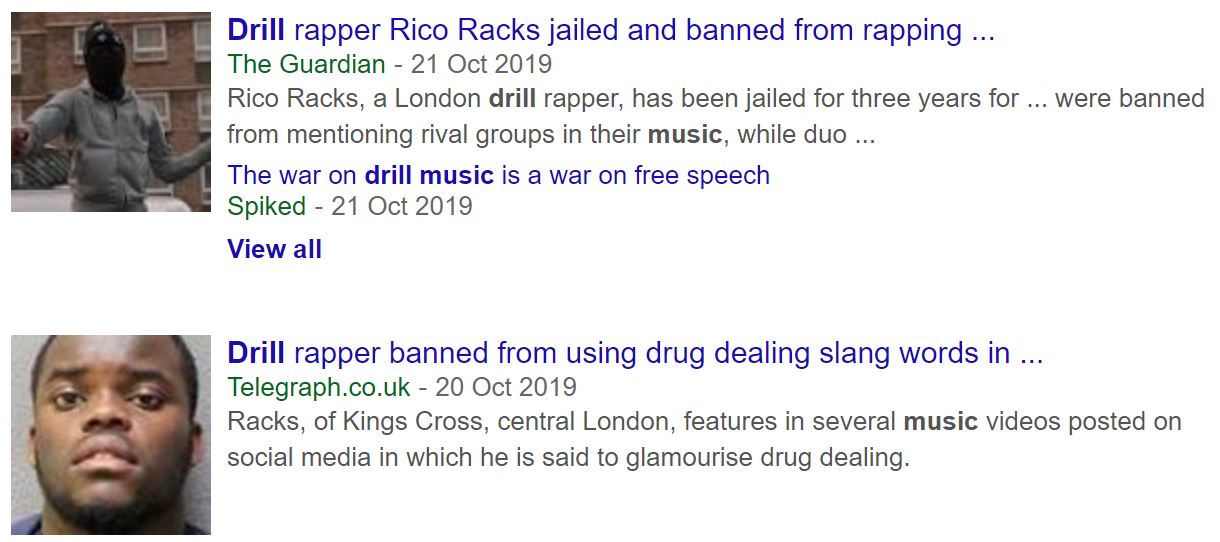
 Music has also made headlines in several ways such as the debate on drill, sexualisation of women in music videos and the pirating epidemic.

Both the debate on women and drill have been on whether it was done out of liberation and self-expression or whether or not it was inappropriate and glamorised a certain lifestyle or image.

Due to this debate, police have tried to crack down in drill due to the fact that many drill artists glamourise the idea of a lifestyle of crime and drugs. Regulation has also cracked down on sexualisation of women in music videos and the general societal view of the sexualisation of women has changed to deem it as wrong.

There has also been the issue of piracy in the music industry that has risen alongside the rising popularity and use of the Internet. The internet has allowed for music to be downloaded for free (illegally) through sites such as youtubetomp4converter and tubidy, therefore reducing the revenue artists and labels could claim. This prompted the Digital Economy Act in 2010 which forces Internet Service Providers to take more responsibility in tackling and dealing with copyright. Although piracy still occurs, it shows a step in trying to tackle it. Furthermore, the music industry also tackled the issue by reducing their CD prices and production and increasing the prices of tour tickets to make up for lost sales and ensure monetization.


Overall, I have taken these aspects into consideration for my artist. I have to make sure that my music video is appropriate and family-friendly in order to to have it able to broadcast to a mass audience. Furthermore, I need to create other merch and feature a tour page on my website. They will act as a means for my artist to make revenue in light of the piracy trend and maximise the profit made for Sony.


Wednesday, October 2, 2019

Post 2. The role of the internet in the music industry

The internet has played a large part in helping artists go worldwide, therefore, I decided to research on how artists used it in order to incorporate it into my own artist's website and social media.

The internet is trans-border and so it can help spread information and news about artists across countries instantly helping them go viral and giving them access to a larger potential fanbase. Furthermore, social media on the Internet increases the amount of interactivity between the artist and the fanbase. Therefore, compared to earlier artists, current artists can form more personal bonds with their fanbase who interact a lot more with them. Fans are now able to directly comment on artists posts or tweets and keep up with the artist's events or daily life or find out their artist's views, attitudes and beliefs, all on their personal phones. Fans can also choose to follow different artists and see their posts integrated within their personal feed which helps to increase the familiarity of the artist. Therefore, the artist-fan relationship has become a lot more personable and proactive (therefore more loyal) than before and many artists are now seen as 'friends' in comparison to before where artists were seen as untouchably famous.

Most artists have an easy to navigate website that is eye-catching and filled to the brim with extra content. Although a lesser amount of the fanbase will go onto the website, in comparison to social media, the experience is worth it due to the exclusive content that you would only find on the websites. Content such as interviews, cross-brand promotions and competitions and sign-ups.

Furthermore, artists also tend to cross-promote their platforms and sites. Most artist websites will promote their social media and streaming services and vice versa. In addition, they will have a consistent aesthetic or brand image that is promoted through all the platform to create synergy, such as Ariana Grande's vintage-style aesthetic.
Most often, this is done through the colour palette.

Overall, by looking at how other artists have used the internet, I found that it was extremely important that my artist had to have a strong colour palette as well as remembering to cross-promote.

Tuesday, October 1, 2019

Post 1: The UK Music Industry

I wanted to research the UK music industry before planning anything. I found out that Sony BMG is seen to be one of the 'Big Three' recording labels which dominate the UK scene, alongside Universal Music Group and Warner Music Group. My fictional artist has been assigned to Sony UK (CEOed by Jason Iley since 2014) in the set brief and so I wanted to find out how Sony worked and it's beliefs.

Sony is a massive conglomerate that is vertically and horizontally integrated (owned by Japanese company SME) and is home to some of the worlds biggest artists. Artists such as Mariah Carey, The Jackson 5, One Direction and Camilla Cabello. It has a total net worth of $7.27million and owns many smaller labels such as Columbia Records and Ministry of Sound.

As Sony is both vertically and horizontally integrated, it means that it owns it's own in house production and recording studio. This allows them to maximise their profits as they don't need to go pay another company to help them produce or record.

Sony also has many subsidiaries within the company which specialise in different genres of music which help ensure that the quality of music that is bought out will be at a high.
 Artists that sign onto record companies are usually signed onto an exclusive contract. This contract will usually last either 3, 7 or 10 years where the artist would work exclusively under the company and get a certain percentage of their total earnings whilst the majority of it goes to the company.

Sony's contract shows that their artists earn about 10% of the royalties that they make. This is common in many contracts, however, Sony has come under fire for abusing this contract and has been dubbed to give out 'slave contracts'.

Artists such as Ke$ha have come out to say that Sony has wrongfully mistreated her, overworked her and underpaid her, disillusioning many to the supposed easy life of a superstar.

Despite this, Sony still remains as one of the largest records and is proliferate in the UK music scene. They are particularly successful in pop where they took up 29% of the top 100 and 34% of the top 40 in the 2017 UK charts.


By looking at Sony and understanding how it worked, not only in comparison to its competitors but also its relationship with its artists, I was better able to create a vision of my artist. I understand that Sony has a massive catalogue of artists and was able to provide a good budget for my artist, however, I needed to ensure that my artist would be unique and have longevity and a mass appeal, due to the genre of pop stated in the brief, but also as Sony would be keen on making profit through my artist brand image. Therefore, I decided that I would use stop motion as my USP for my music video and that for my actual artist, I would make their gender and sexuality unknown. This is due to the fact that a persons gender and identity and become a large topic of debate lately and many youths have difficulty in understanding themselves and their identity. Furthermore, although gender and sexuality shouldn't cause different perceptions to be held on people, they often do, especially in music where labels may exploit an artists sexuality and gender (for example the sexualisation of women in music). By making my artist's gender and sexuality unknown and play it down, it can help include a lot more people who aren't represent in the media whilst also reflecting Sony's agenda of being home to a wide range of unique and inclusive artists.

Monday, December 10, 2018

Blog Post 20: Closing Post

Dear moderator,

Thank you for looking at my blog! I hope you like my work. Please click onto the AS Research and Planning label in order to view my research and planning evidence.
Thank you :)

Cathy Ly (candidate 3122)

This blog is now closed.

Monday, December 3, 2018

Blog Post 19: My Finished Adverts

Personally, I'm really happy with how my adverts have turned out as I feel like they successfully convey the fun and friendly brand image that I tried to create for YourFood as well as the quick delivery that they provide. I hope that are memorable adverts through the comedy and mockumentary film style and are therefore convincing enough to attract the TA to YourFood.


Overall, it was quite tough in making these adverts due to the tight time frame that we were given, however, I'm really proud of how much I was able to achieve and I found that it was an incredibly fun experience which has allowed me to learn a lot in editing and filming and grow as a person.

Blog Post 18: My Target Audience Feedback

I showed the 6 people that I had surveyed earlier (Bobbi (17), Simon (17), Minh (19),  Roland (20), Chi (23), and Scott (24)) and my mum my finished advert in order to see what they thought of it and any feedback and improvements that they could give me. I asked them several questions and then later gathered together all of their answers to come up with a summary of what they said.

Questions Asked

Summary of Overall Answers


I would not have been able to see the flaws in my adverts without these criticisms mainly due to the fact that I had been so used to my adverts after working on them so intensely so it was extremely useful to get a verdict from fresh eyes in order for me to be able to improve in future projects. In hindsight, I would have done several things differently such as imposed the YourFood logo more explicitly and explicitly advertise the product in order to prevent confusion on what the adverts are advertising. I would have also filmed some of the shots in better lighting in order to make colour grading easier to do.